THE AMAZING WONDERS OF TUTANKHAMUN. AN EXPLORATION OF HIS TOMB IN THE VALLEY OF THE KINGS AND HIS FABULOUS GALLERY IN THE GRAND EGYPTIAN MUSEUM.
Howard Carter’s discovery of the tomb of Tutankhamun in 1922 has captivated people throughout the world. I was enthralled with the story as a young boy and hoped to someday visit the tomb itself. We flew to Luxor to see King Tutankhamun’s actual tomb in the Valley of the Kings. It was really interesting after seeing so many pieces from his tomb in the fabulous galleries at the brand new Grand Egyptian Museum in Cairo.

The startling discovery began in November 4, 1922 when a young worker carrying water found himself falling over a stone. This was not just any piece of rock: this was in fact the beginning of a flight of steps. The steps led down to a doorway decorated with seals and hieroglyphics. Immediately, Carter realised the potential of this and asked for the staircase to be filled in, so as not to reveal the potentially ground-breaking discovery. Keeping details close to his chest, he sent a telegram to Lord Carnarvon, who financed Carter’s explorations, informing him and two weeks later, on 23rd November Carnarvon arrived, keen to uncover the mysteries which lay behind the sealed door.
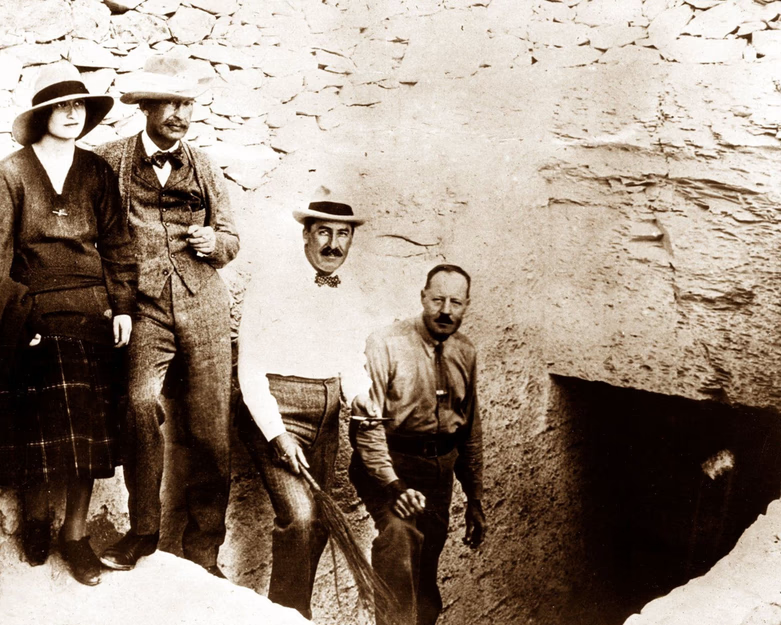
The 5th Earl of Carnarvon and Howard Carter stood outside a sealed door in the Valley of the Kings in Luxor, Egypt. Nervously, Carter made a small hole in the door, and reached up to hold a candle. “The candle flickered as the air escaped…” The excavators widened the gaps in the plaster and Lady Evelyn, Lord Carnarvon’s daughter, Lord Carnarvon and Howard Carter climbed in and everywhere “There was a glint of gold…”

The layout of the tomb and what was discovered inside.

An array of objects for King Tutankhamun to use in the afterlife.
An interesting video on Howard Carter.

Carter and his team spent ten years (1922–1932) excavating, documenting, and clearing the thousands of artifacts found within it.
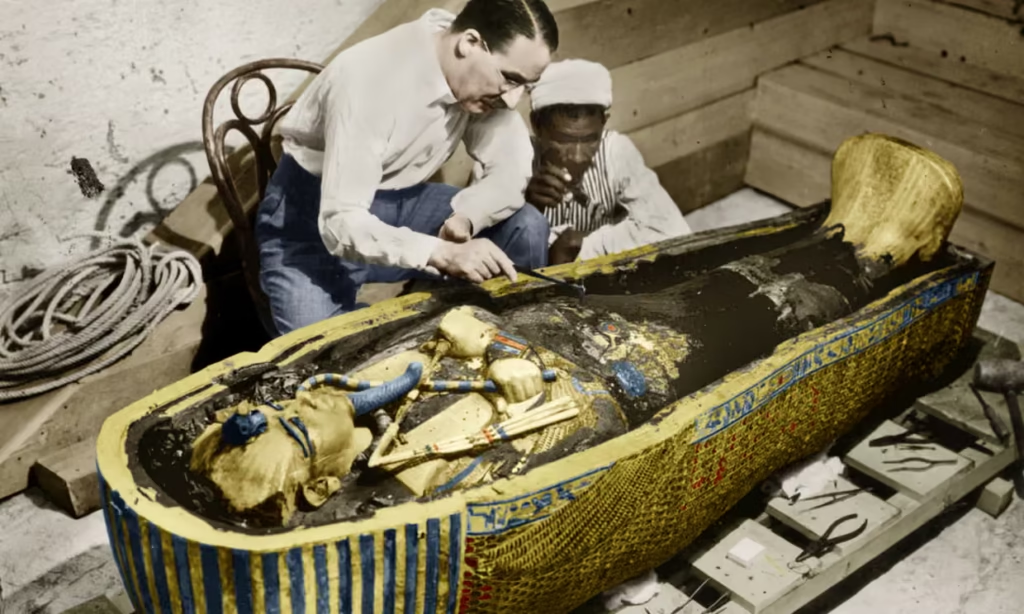
Carter inspecting the sarcophagus.

Marla and I venture into the Valley of the Kings with our AHI tour. We were both very excited!

In front of tomb entrance.

Marla heads down into the tomb.

The only thing remaining in the tomb are the mummified remains of the 19 year old King Tutankhamun.

Vivid wall paintings in the tomb depict scenes from the Pharaoh’s journey through the underworld. The colors almost looked like they were painted yesterday!

Our visit to the Grand Egyptian Museum and the King Tutankhamun Galleries were simply amazing! This is the outermost golden coffin of the king dating back more than 3,00 years to Egypt’s 18th Dynasty. It is carved from wood and covered in sheets of gold.

The feathered patterns and engraved hieroglyphic texts represent protection and eternal life.

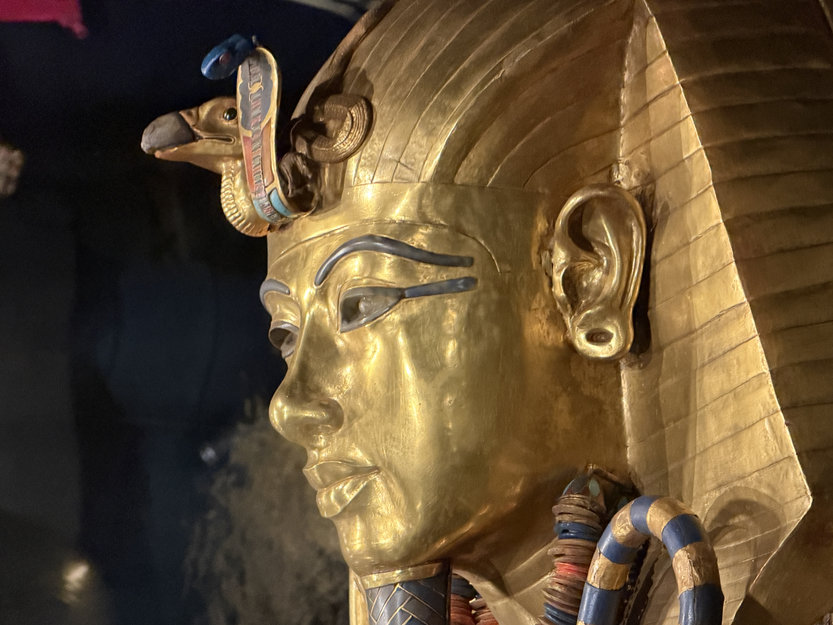
This is the actual funeral mask placed directly on the mummy. It is crafted from almost 23 pounds of solid gold and decorated with lapis lazuli and semi-precious stones. The mask represents the pharaoh as Osiris, the god of the afterlife. The cobra and the vulture at the top of the headdress represents Upper and Lower Egypt.

The drawing shows how the coffins and the golden shrines were put together.

The four shrines on display in the GEM gallery. Each were placed on top of another protecting the coffins and the actual mummy.

This is the gilded outermost shrine of the Pharoah.

The carved life-size wooden statue of King Tutankhamun designed to house the “ka” of spirit of the Pharaoh after death.


This is the fascinating golden Canopic Shrine containing jars of the Pharoah’s preserved internal organs. It is protected by golden goddesses.

King Tut’s tomb contained an immense collection of jewelry designed to protect the pharaoh in the afterlife. Over 150 items, including amulets, pectorals, rings, and collars, were found on the mummy and within the tomb, crafted from gold, lapis lazuli, turquoise, carnelian, and colored glass.


Necklaces for the king to wear in the afterlife.


The jewelry was beautifully crafted and designed. The large scarab in the bottom image symbolized the rising sun and rebirth, flanked by the goddesses Isis and Nephthys.


The tomb contained a number of alabaster perfume vases each with unique symbolism.

The stunning golden throne of King Tutankhamun.


Constructed of wood covered in gold, silver, and inlays of semi-precious stones and glass, it features an intimate backrest scene of Queen Ankhesenamun anointing the pharaoh.
The video show visitors enthralled in the Grand Egyptian Museum’s King Tutankhamun Galleries.

Marla and I were excited to visit the “Treasurs of Tutankhamun” exhibit when it first opened at San Francisco’s De Young Museum in 1979. We made reservations as soon as it was announced. There were a total of 55 objects on display and visitors lined up for blocks to get into the museum. The new King Tutankhamun galleries at the Grand Egyptian Museum display over 5000 fascinating objects found by Howard Carter and his team in 1922. At the time we never imagined actually traveling to Egypt and seeing the wonders of King Tutankhamun’s tomb!
King Tutankhamun was a very insignificant and short lived pharaoh. The tombs of the more important pharaohs were ransacked over many centuries. We are very lucky that king Tut’s tomb essentially intact.
Photos: Dick Gentry. Not to be used without permission.
About The Author

admin
Related Posts

A WONDERFUL TRIP TO VAIL WITH THE FAMILY
Marla and I were amazingly happy to have a family trip back to Vail, Colorado…
March 6, 2026
A LOVE OF TREES
Kahlil Gibran once wrote,“Trees are poems that the earth writes upon the sky…
March 6, 2026
Leave A Comment